Biography
Early Life
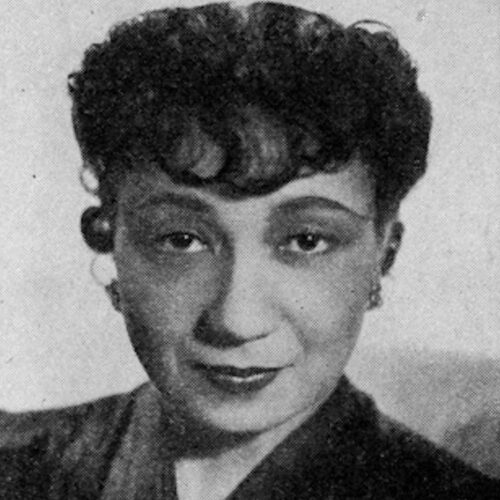
Etta Moten Barnett was born on November 5, 1901, in Weimar, Texas. Her father, Rev. Freeman F. Moten, was an African Methodist Episcopal (AME) minister. Her mother, Ida Norman Moten, was a schoolteacher. Faith and education were at the center of her upbringing. She taught Sunday school when she was ten years old and sang in the church choir.
Barnett began her studies at Paul Quinn College on a singing scholarship. In 1914, her father moved the family to Los Angeles, where she attended school for two years. They later settled in Kansas City, Kansas, where she continued her studies at Western University, the only historically Black college west of the Mississippi at the time.
At 17, she married Lieutenant Curtis Brooks, a former teacher. They had three daughters: Sue, Gladys, and Etta Vee. After six years, the marriage ended in divorce. Barnett then enrolled at the University of Kansas, where she studied voice and drama. She performed with the Jackson Jubilee Singers and hosted a university radio program. She earned a Bachelor of Fine Arts degree in 1931 and joined the Eva Jessye Choir in New York. She went on to perform in Broadway musicals including Zombie and Sugar Hill.
Her career moved quickly in New York. She landed a role in an all-Black Broadway show, and when it closed, joined another production that toured its way to California. There, she moved into Hollywood. Her rich contralto voice was featured in films before she appeared on screen in Gold Diggers of 1933. In 1934, she became the first Black woman to perform at the White House. That same year, she appeared in Flying Down to Rio, and her song “The Carioca” received an Academy Award nomination.
In 1942, she starred in a Broadway revival of Porgy and Bess. She retired from formal singing in 1952, having performed alongside many legends in her career.
Religious Faith and Activism
Faith was the foundation of Etta Moten Barnett’s life. It shaped her values, her art, and her commitment to justice. Growing up as the daughter of an AME minister meant that church and community were always close. That spiritual grounding stayed with her throughout her life.
Her faith fed directly into her activism. She was involved with the African American Institute, the National Council of Negro Women, and the National Conference of Christians and Jews. She used her public platform to speak up for racial equality and women’s rights. She was especially active in the women’s movement and supported efforts across Africa for independence.
She joined Alpha Kappa Alpha Sorority, Inc. at the University of Kansas. The sorority hosted her for recitals and fundraisers. By the late 1930s they had a scholarship in her name to support young Black women interested in music.
She married newspaper publisher Claude A. Barnett in 1934. His business connections brought them frequently to West Africa, mostly Liberia and Ghana. Through those ties, she became a goodwill ambassador. She took part in talks about African and American relations during the 1950s. She and her husband co-wrote a travel diary in 1949 about the West African coast and its interior regions.
Barnett documented food, music, fashion, and culture along the way as she traveled across Africa from the 1940s through the 1980s. She met leaders like Ghanaian President Kwame Nkrumah. She and her husband collected African art and filled their Chicago home with African-inspired décor. That home became a gathering place for African American and Caribbean leaders and diplomats.
She remained a strong supporter of women’s rights throughout her life. She took part in the United Nations’ International Decade for Women program during the 1970s and 1980s as a member of The Links, Inc., a service organization of prominent Black women. She represented the Links at the United Nations conferences in Mexico City, Copenhagen, and Nairobi. She connected her own experiences as a Black woman in America to the struggles of women around the world.
Etta Moten Barnett stayed active in cultural and community organizations. Her life left a lasting mark on African American culture and on relationships between the United States and Africa.