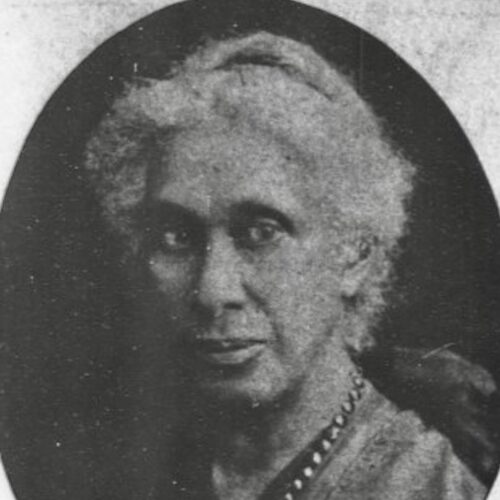
Biography
Early Life
Elizabeth Lindsay Davis was born in 1855 in Peoria, Illinois. Her parents were Thomas and Sophia Lindsay. They were strong advocates of equal rights for African Americans. Her father was the first African American market master in Peoria. He was well known for his activism. He bought Davis’ mother her freedom. He also bought the freedom of many others. The Lindsays’ dedication to justice influenced Davis from a young age.
Davis first went to a small school for Black children at the Ward Chapel AME Church in Peoria. Her parents sent her to Princeton Township High School when she was older. It was an integrated high school. Davis graduated with high honors in 1873. She gave a powerful speech titled “The Past and Future of the Negro.” She argued that Black Americans deserved the same opportunities as others to succeed. Her speech was printed in newspapers across Illinois. This showed her early passion for equality.
These early experiences gave Davis a strong sense of purpose. Her family’s dedication and her own success in school set her on a path. She became a leader for Black women and a powerful voice for civil rights.
Activism
Davis was a strong leader who spent her life improving the lives of Black Americans, especially Black women. She moved to Chicago in 1893 after working as a teacher. She became involved in civil rights and women’s rights. Davis founded the Chicago Chapter of the Phyllis Wheatley Women’s Club in 1896. It was named after the famous African American poet. Phyllis Wheatley clubs worked to improve neighborhoods. She served as its president for 29 years. She helped Black women in Chicago by providing housing, education, and job training. She also started the Phyllis Wheatley Home for Girls to give young Black women a safe place to live in 1908.
Davis was very active in the National Association of Colored Women (NACW). She served as a national organizer for nearly a decade. She helped connect Black women’s clubs across the country. She also served as president of the Illinois Federation of Colored Women’s Clubs (IFCWC). She wrote The Story of the Illinois Federation of Colored Women’s Clubs to preserve the history of Black women’s organizations in Illinois. She published her most famous book, Lifting as They Climb, in 1933. It tells the story of Black women’s club movement and their fight for equality. The Black women’s club movement held its first national conference in 1895. This influenced the formation of the NACW in 1896. Davis’ work made a huge impact on Black women’s rights. Her efforts created opportunities for Black women to organize and lead. Her legacy continues to inspire those who fight for justice and equality today.
Religion
Faith was a powerful force in Davis’ life and work. She was a member of St. Mark’s Methodist Episcopal Church in Chicago. She followed her Christian beliefs through serving others. Her faith taught her the importance of helping people in need and fighting for justice. This belief led her to improve the lives of Black women and families in her community.
Davis believed faith should lead to action. She believed in “lifting as we climb.” This meant that success includes helping others as individuals, as leaders, and as a community. She wanted everyone to have the chance to live with dignity and hope.
Through her speeches, writings, and leadership, Davis showed that faith should inspire change. Her work was rooted in her belief that faith calls those to serve others and fight against injustice. Her actions left a lasting impact and continue to inspire those who seek to uplift their communities.