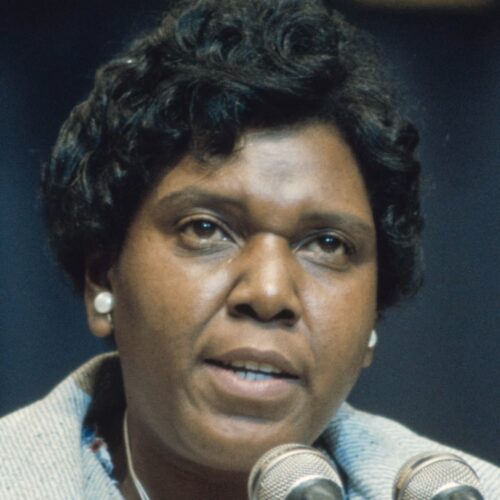
Biography
Early Life
Barbara Jordan was born on February 21, 1936, in Houston, Texas. Her father, Benjamin Jordan, was a Baptist minister. Her mother, Arlyne Jordan, was a homemaker. Barbara was the youngest of three daughters. The Jordans were a close family with strong ties to the African American community.
Jordan grew up in a segregated neighborhood where Black and white people were kept separate. Her family believed strongly in education and had clear values about right and wrong. Jordan was very smart and showed strong leadership skills early on. She did excellent work at Phyllis Wheatley High School. She joined student government and the debate team. During high school, people noticed her natural talent for public speaking. She earned a scholarship to Texas Southern University (TSU), where she got her bachelor’s degree in 1956. Then she went to Boston University School of Law and graduated in 1959. She was one of very few African American women in her law school class.
In 1972, Jordan became the first African American woman from Texas elected to the United States Congress. Her election was a historic moment for both Texas and the country. It was an important step forward in breaking down racial and gender barriers in American politics. Jordan’s groundbreaking election to Congress was a major achievement in her career. It helped make her a well-known national figure.
Jordan became famous for her powerful speeches during her time in Congress. She gave a strong speech supporting impeachment charges against President Richard Nixon during the Watergate hearings. She stressed how important the Constitution is and that government leaders must be held responsible for their actions. Jordan served in Congress from 1973 to 1979. She fought for civil rights, social justice, and changes to public policy. Jordan’s impact helped pave the way for future generations of women and minority leaders in politics. She inspired many people to pursue careers in public service.
Jordan’s early career focused on civil rights. She served in the Texas State Legislature in the late 1960s. Her activism was shaped by growing up in a society divided by race. She was deeply influenced by the Civil Rights Movement and became a strong advocate for equality and justice.
Religious Faith & Activism
Jordan’s religious faith played an important role in shaping who she was and what she fought for. She grew up in a deeply religious Baptist family. Her early experiences in church taught her the values of helping others, social justice, and doing what’s morally right. These beliefs guided her throughout her personal life and career. They influenced how she thought about civil rights and public service.
Jordan’s faith wasn’t just something private. It shaped how she understood justice and equality. She often talked about the moral reasons behind her political work. She stressed that her work was a way of serving the community and living out her Christian beliefs. This connection between her faith and activism showed clearly in her powerful speeches. Jordan often spoke about justice and doing what’s right. One example was her keynote speech at the 1976 Democratic National Convention. She talked about a vision of American democracy based on moral responsibility.
Jordan’s faith drove her work for civil rights and social justice. She became a leading voice in the fight against discrimination and inequality. She often talked about how race, gender, and class overlap and affect people’s lives. Her commitment to these issues showed in her support for laws aimed at helping marginalized communities—groups that had been pushed to the edges of society. These included the Voting Rights Act and various education programs.
Jordan’s activism went beyond her political career. She retired from Congress in 1979 but continued working on social issues, including education, health care, and LGBTQ rights. Although she kept her own sexuality fairly private, her life and work meant a lot to many people in the LGBTQ community. Her fight for equality and justice was clearly guided by her faith. She became an inspiration for those fighting for their rights.
Barbara Jordan’s faith deeply influenced her activism. It gave her a moral framework—a set of beliefs about right and wrong—that guided her work for civil rights and social justice. Her speeches and the laws she supported showed her belief that faith and public service are connected. This makes her an important and inspiring figure in American history.