Biography
Early Life
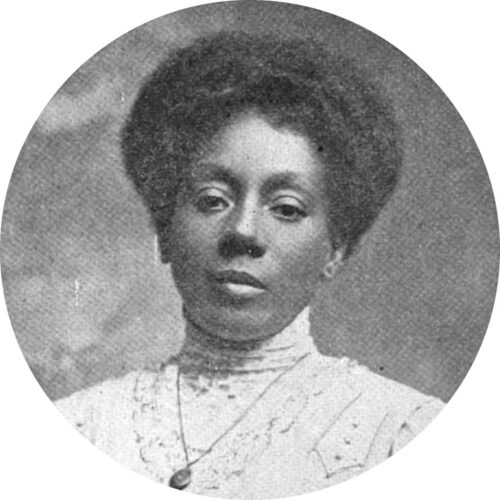
Brooks was born in 1867 in New Bedford, Massachusetts. She grew up in an environment that valued education and activism. New Bedford was the hub for the abolitionist movement. This exposed her early on to the challenges African Americans faced in the North. She attended New Bedford High School. Brooks was also the first Black graduate of New Bedford’s Harrington Normal School for Teachers. She also attended the Swain Free School of Design. There she gained a foundation in architecture, design, and classical education. This served her well throughout her career.
Brooks was a trailblazing educator. She worked as an architect and social reformer. She played an important role in advancing civil rights. She also helped advance educational opportunities for African Americans. Her mother, Martha Webb, was formerly enslaved to President John Tyler. Webb was involved in the Underground Railroad and other abolitionist efforts. This caused Brooks to grow up with a deep sense of justice. Her work helped shape the fight for civil rights and equality. This left a lasting impact on American history.
Brooks made history in 1901 as the first African American woman to be employed as a public school teacher in her hometown of New Bedford. She went on to dedicate more than 25 years of service to teaching at the Taylor School. Her work as an educator reached far beyond the classroom. Brooks began working with the National Association of Colored Women’s Clubs (NACWC) in 1895. She became secretary of the Convention the following year. She was Vice President of the Convention from 1906 to 1908. She led the Convention as its Acting President from 1908 to 1912. Brooks helped the NACW raise funds to purchase and preserve Frederick Douglass’ home in Washington, D.C. in 1922.
Religious Faith & Activism
Brooks was an active member of the African Methodist Episcopal (AME) Church. Her involvement reflected her commitment to serving her community. Brooks retired from teaching in 1929. This was during the challenging era of the Great Depression. She also married a Bishop of the African Methodist Episcopal Church, W. Sampson Brooks, in 1929. The couple settled in San Antonio, Texas. They lived there until the Bishop died in 1934. Brooks returned to her hometown of New Bedford after his passing.
Brooks joined a preservationist group when she returned to New Bedford. The goal of their group was to safeguard African American heritage. She played a key role in purchasing the home of William Carney. He was a Medal of Honor recipient celebrated for his bravery during the Civil War. Brooks later established the Elizabeth Carter Brooks, Jr. Girls Club. This organization allowed her to mentor young women and discuss prominent Black figures.
Elizabeth Carter Brooks died in 1951. She left behind an enduring legacy of education, social justice, and community activism. A school was named after her in New Bedford, Massachusetts, as a tribute to her dedication to education and activism. This celebrated her life’s work. This made her a pivotal figure in the fight for racial and gender equality. It also serves to ensure future generations will remember and be inspired by her contributions. Brooks’ influence extended far beyond her lifetime.