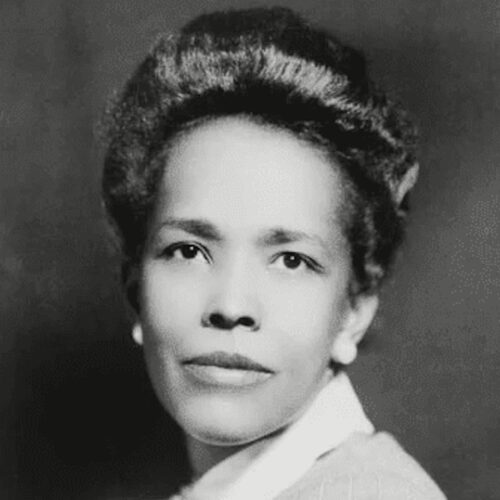
Biography
Early Life
Ella Baker was born on December 13, 1903, in Norfolk, Virginia. She grew up in Littleton, North Carolina. Religion was a major part of Baker’s upbringing. She was introduced to the church’s teachings at an early age. Her church emphasized equality, justice, and love. Josephine Elizabeth “Bet” Ross was her maternal grandmother. She had a big impact on Ella Baker’s moral principles and faith.
Baker’s passion for activism wasn’t solely fueled by her religious beliefs. She grew up in the racially divided South. She saw injustices and inequalities that African Americans had to deal with as a child. This inspired her to fight for change and commit to social justice.
She attended Shaw University in Raleigh, North Carolina. There, she joined the Young Negroes Cooperative League. It was committed to social justice and economic empowerment for African Americans. Baker co-founded the Southern Christian Leadership Conference (SCLC) after she graduated. She served as its Executive Secretary. She was also the Director of Branches for the National Association for the Advancement of Colored People (NAACP). Baker founded In Friendship in 1956. This organization brought together isolated local grassroots leaders for support and leadership training.
Activism Through SNCC
Baker was inspired by student activists. Baker led a meeting at Shaw University for student sit-in leaders in April 1960. The Student Nonviolent Coordinating Committee (SNCC) was created in this meeting. Baker and Septima Clark were both leaders and community organizers who realized the importance of grassroots women leaders. Baker’s SNCC and In Friendship and Clark’s Citizenship Schools laid the grassroots foundation for the Civil Rights movement. They were central support structures for the Civil Rights Movement. They empowered grassroots people and supported their well-being and leadership. They equipped local people to support the Civil Rights Movement as it moved into the South’s Black Belt.
SNCC, In Friendship, and the Citizenship Schools helped lift local Black people who had no legal rights and were at risk of white violence. Many Black people in the Black Belt at that time were not involved with politics until these three organizations helped them to organize and work for civil rights. SNCC supported nonviolent direct action.
SNCC developed youth leadership in the poorest and most oppressed areas. It also empowered youth leadership in more privileged areas in the nation. SNCC unified the Civil Rights Movement in areas of the Black Belt that had been resistant or in dangerous areas due to racism. SNCC used In Friendship’s model of supporting local grassroots leaders. It created a national network of leadership with the same social justice goals.
In Friendship also helped to fundraise for the growing Civil Rights struggles in the South. The group gave thousands of dollars to the Montgomery Improvement Association (MIA). In Friendship raised funds for the SCLC. It gave funds to Martin Luther King, Jr.’s organizing during its three years of operation. It funded King’s 1957 trip to Ghana with $500 helping him secure a $4,000 grant for his 1959 trip to India.
Baker’s role in SNCC was one of her greatest accomplishments. She was a mentor and advisor to young activists. She formed the organization’s guiding principles and philosophy. SNCC became a major player in the civil rights movement under her direction. Many people were inspired and mentored by Baker during her life. Black women were often disadvantaged by the male-dominated leadership of the civil rights movement. Black women were empowered by her.
Baker saw the distinctive perspectives and contributions of Black women activists in the fight for justice. She offered Black women organizing space and support. Baker displayed inclusive and participatory leadership. She put teamwork and consensus-building ahead of hierarchical power. She thought it was critical to support community-based leadership. She believed in giving everyday individuals the confidence to own their struggles.
Ella Baker’s life and legacy reveal the effectiveness of community organizing and grassroots activism in the fight for social justice. She inspires activists worldwide. Her commitment to equality and her inclusive leadership style are relevant today.