Biography
Early Life
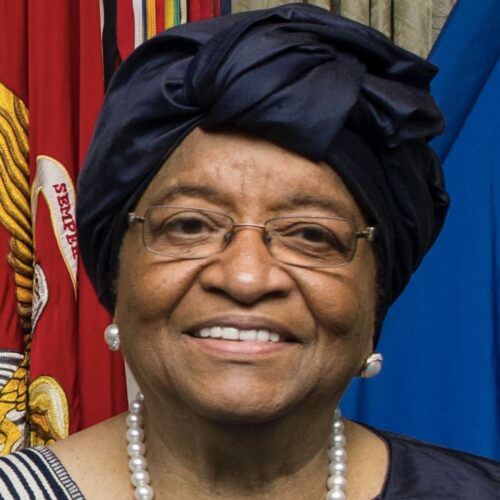
Ellen Johnson Sirleaf was born on October 29, 1938, in Monrovia, Liberia. She attended the College of West Africa in Monrovia from 1948 to 1955. She married James Sirleaf when she was 17 years old. They had four sons.
Sirleaf moved to the United States with her husband to further her education in 1961. She earned an associate degree in Accounting from Madison Business College in Wisconsin. She worked for the Treasury Department in Liberia. Her marriage ended due to abuse. She was determined to advance her career. Sirleaf obtained a Bachelor’s degree in Economics from the University of Colorado Boulder in 1970. She later earned a Master of Public Administration from Harvard Kennedy School in 1971.
Sirleaf began her government career in Liberia as the Assistant Minister of Finance in 1972. She became the Minister of Finance in 1979. She spoke out against government corruption. This brought her into conflict with political leaders. She quit her job over fights over spending policies. Following Samuel Doe’s 1980 coup, she briefly served with him but quickly became a fierce opponent. Her open criticism of the regime got her jailed in 1985. International pressure secured her release. Sirleaf rejected the results of a fake Senate election and chose to go into exile. She fled Liberia because of ongoing threats.
Religious Faith and Activism
Sirleaf’s religious faith was a guiding force throughout her life. She was a dedicated member of the United Methodist Church. She often spoke about the role of faith in her decision-making. Her Christian values of service, justice, and integrity shaped her leadership and activism. She saw governance as a moral responsibility. She used her platform to advocate for ethical leadership, democracy, and women’s rights.
Sirleaf took on roles with international financial bodies such as the World Bank, Citibank, and the United Nations Development Programme. Her influence in global economic affairs earned her the title “Africa’s Iron Lady.” She briefly supported Charles Taylor’s 1989 rebellion against Doe. She later withdrew her support when Taylor’s actions became violent. This showed her commitment to justice over political ambition.
Sirleaf remained dedicated to Liberia’s growth even while living in exile. She founded Measuagoon, a non-governmental organization focused on community development. She also founded the Kormah Development and Investment Corporation to support African business owners. She played a key role in international peace efforts. Sirleaf served as a commission chair for the Inter-Congolese Dialogue. She worked with the United Nations on post-conflict reform. Her faith teachings on forgiveness and unity influenced these efforts.
After Charles Taylor’s exile and the creation of the National Transitional Government of Liberia in 2003, Sirleaf returned to Liberia. She chaired the Governance Reform Commission that led anti-corruption reforms. Sirleaf resigned to run in the 2005 presidential election. Her campaign emphasized transparency, economic growth, and national healing. She won with the strong support from women and civil society groups. Sirleaf was Africa’s first elected female head of state.
Sirleaf’s faith and activism remained central to her presidential leadership. She prioritized economic recovery, secured debt relief, and attracted foreign investors. She also fought for women’s rights. She launched programs to increase female participation in politics and business. She established the Truth and Reconciliation Commission to address past injustices in 2006. Her administration also created the Anti-Corruption Commission in 2008. This secured her commitment to honest governing.
Sirleaf’s dedication to peace and human rights earned her international fame. She received the Nobel Peace Prize in 2011. This honor was shared with Leymah Gbowee and Tawakkol Karman. They won for their work on women participating in peace-building. She was also awarded the United States Presidential Medal of Freedom and numerous honorary doctorates.
Sirleaf remained guided by her faith and a deep sense of duty to Liberia throughout her life. Her activism was shaped by religious conviction and strength. She transformed the nation and inspired a new generation of African leaders. As a Methodist and global advocate for good governance, she proved the power of faith, integrity, and service in creating lasting change.