Biography
Early Life
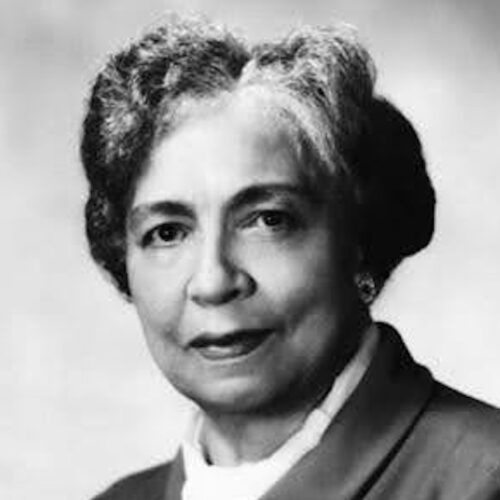
Dorothy Boulding Ferebee was born on October 10, 1898 in Norfolk, Virginia. Her family was committed to education and community service. Experiences with racial discrimination shaped their values. This instilled in her a deep-seated desire for justice. From a young age, Ferebee was drawn to medicine. She was inspired by a calling to help others. Her ambitions were encouraged by her mother and aunt. They instilled in her the confidence to pursue a professional career.
Ferebee moved from Norfolk to Boston for better educational opportunities. She was an outstanding student. She graduated with honors from Simmons College in 1920. Then she entered Tufts University School of Medicine. She faced gender and racial prejudices. Still, she graduated near the top of her class in 1924 as an Obstetrician. Racial barriers prevented her from securing an internship at white hospitals after graduation. This led her to complete her training at Freedmen’s Hospital in Washington, D.C. This was one of the few hospitals serving African Americans at the time.
Ferebee established a private practice in Washington, D.C., in 1925. Black communities in D.C. had little access to healthcare. She recognized the critical needs within these neighborhoods. She founded the Southeast Neighborhood House. It offered affordable and free medical services to Black families. She quickly became an integral part of the local community. She addressed medical needs and advocated for social support services. Social services included daycares and playgrounds for children. Her work with the Southeast Neighborhood House addressed healthcare disparities. She brought critical medical resources to underserved populations.
Religious Faith & Activism
Ferebee’s faith was central to her life and work. She often spoke in churches. She viewed her medical mission as part of a broader spiritual calling. She emphasized that healthcare was not just a public service but a moral obligation. She believed that communities had a role to play in advocating for health and well-being. This was especially true within marginalized populations. Church gatherings allowed her to build support and educate communities. She believed in healthcare as a human right. This reinforced her belief that her work was both medical and spiritual in nature.
Ferebee was an active member of the Alpha Kappa Alpha (AKA) sorority. It sponsored the Mississippi Health Project from 1935 to 1941. She led this effort. It brought critical healthcare to the Mississippi Delta. Her religious convictions greatly fueled her involvement. The initiative’s goal was to bring medical care to Black sharecroppers in the local region. These communities had little to no access to basic healthcare. They suffered from malnutrition and a lack of vaccinations. They also lacked sufficient maternal care. Ferebee and her team faced threats and resistance from white plantation owners. They persisted in their mission by organizing mobile clinics staffed by volunteer nurses and physicians. They administered vaccinations, treated infections, and provided preventive healthcare. The project became one of the most successful mobile healthcare efforts of the time. She and the rest of the volunteers immunized over 15,000 children. This drew national attention to how she met the needs of this underserved community.
Ferebee’s mobile clinics were a pioneering model for mobile healthcare. It met the often-overlooked medical needs of rural areas. Her leadership shed light on the systemic racial inequalities in American healthcare. She has been an inspiration to future generations of activists and healthcare providers.
Ferebee’s impact extended beyond the Mississippi Health Project. She became the Director of Health Services at Howard University in 1949. She served as President of the National Council of Negro Women from 1949 to 1953. While serving, she advocated for issues like housing, education, and healthcare on a national scale. Her commitment to public health and equal access later earned her an appointment to President John F. Kennedy’s Council for Food for Peace. This opportunity allowed her to travel to Africa to promote preventive healthcare and public health education internationally.
Dorothy Boulding Ferebee’s life and work represent a powerful combination of faith, service, and activism. Her dedication to public health, equality, and service left a lasting legacy. Inspired by faith and justice, she became a pioneer in healthcare, civil rights, and community service.