Biography
Early Life
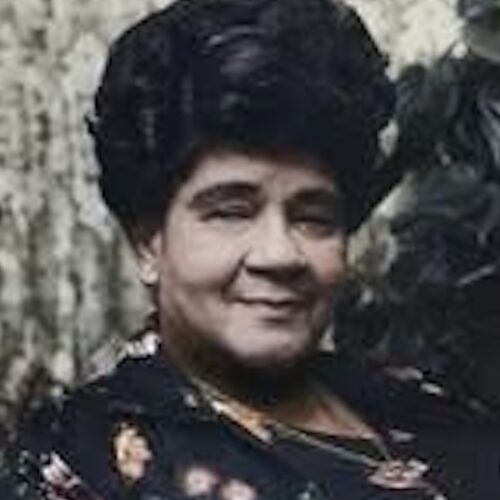
Arenia Cornelia Mallory was born on December 28, 1904, in Jacksonville, Illinois. She grew up in a religious home and was deeply influenced by the Church of God in Christ, known as COGIC. Her faith shaped the way she saw the world. It taught her to believe that moral leadership and education could change lives.
In 1926, Mallory met Bishop Charles H. Mason, the founder of COGIC. He asked her to move to Lexington, Mississippi to lead Saints Industrial and Literary School. She was only twenty-two years old. Her work at the school showed how faith and action could go hand in hand, especially when serving communities that had been left behind.
Notable Achievements
Mallory faced real barriers because of her race and her gender. She pushed through them anyway. She earned degrees from the University of Illinois and Jackson State University, and later received a PhD from Bethune-Cookman College. Education mattered deeply to her, both in her own life and in her work.
She led Saints Industrial and Literary School from 1926 to 1976. Over time it grew into Saints Academy and Junior College. During segregation, when Black students were kept out of quality schools, Saints Academy gave them a strong education and a real future.
Her work earned wide recognition. The National Council of Negro Women named her one of America’s most outstanding women in both 1940 and 1948. The NAACP and Delta Sigma Theta Sorority also honored her contributions to civil rights and education. In 1968, she made history as the first African American woman elected to the Holmes County Board of Education.
Social Change Through Christian Activism
Mallory’s faith drove everything she did. She built her teaching on Christian values that stressed equality, self-reliance, and human dignity. At Saints Academy, she created more than a school. She built a community where students received spiritual guidance alongside their education. She wanted young people to leave prepared to make a difference in their own neighborhoods.
She also pushed COGIC women to get involved in activism. She worked to improve the standing of Black women in both religious and civic life. She believed education was a tool for freedom — that knowledge could open doors that racism had shut.
Her style of leadership became a model for mixing faith with advocacy. She helped women step into leadership roles in churches and in public life at a time when those opportunities were rare. Her work improved life for Black communities and pushed the larger goals of justice and democracy forward.
National and International Advocacy
Mallory’s reach went far beyond her school and her state. In 1950, she became the first Black woman invited to attend the inauguration of President Harry S. Truman. She later advised President John F. Kennedy’s U.S. Department of Labor, helping shape policy that affected working Americans across the country.
She also represented the United States on the world stage. She attended the International Conference of Women in Helsinki, Finland, and represented the country at the United Nations’ tenth anniversary celebration in San Francisco in 1955. These roles showed her ability to connect community-level work with global conversations about justice and equality.
Legacy
Arenia Cornelia Mallory’s life shows what faith, education, and hard work can accomplish. She proved that one person, committed to serving others, could create change that reached far beyond her own community.
Her legacy continues to inspire work toward social justice, equal education, and support for those who have been pushed to the margins. She believed that real leadership means creating opportunities where none existed and refusing to accept injustice as permanent. She died on May 8, 1977, but the institutions she built and the lives she touched continue to carry her work forward.