Biography
Early Life
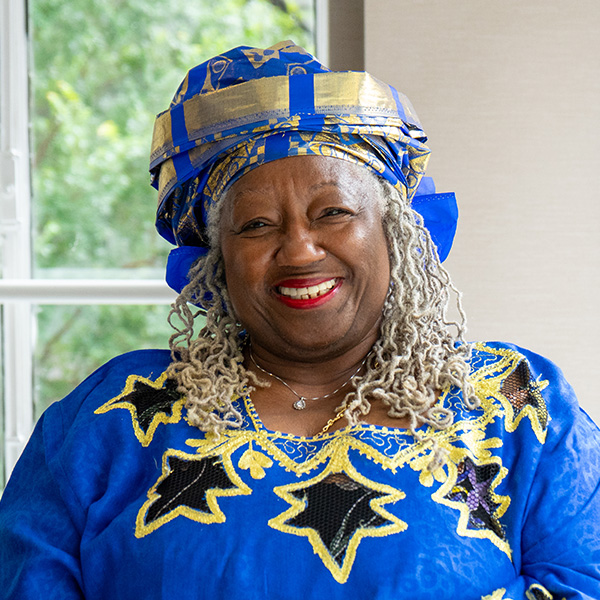
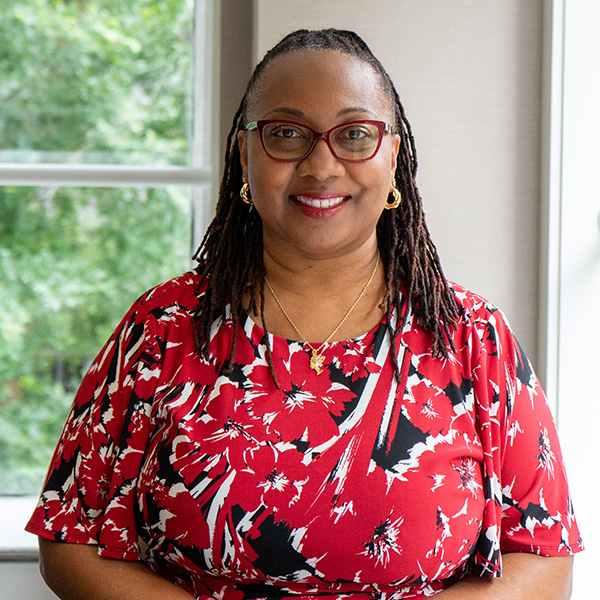
Faye Bush was born in Martin, Georgia. Her parents, Ace and Maggie Johnson, were free sharecroppers. She attended school in a local Christian church and completed a ninth-grade education. She moved to Desota Street in the Newtown neighborhood of Gainesville, Georgia, with her older sister, Mozella. She graduated from Fair Street High School in 1954. She has three adult children: Jonathan, Jackie, and Greg.
Faye’s mother Maggie and a woman named Annie Lou Ware started the Newtown Florist Club in 1950. The Club was formed to care for sick and dying members of their small community. Members brought flowers and wreaths to funerals. This is why the word “Florist” became part of the name. Bush joined the Club at 18 years old and has been active ever since. She served as Club President for 25 years.
Black children were bused to previously all-white schools when integration came to Gainesville in the 1960s. But they were kept out of extracurricular activities. The Club stepped in, organizing sports teams, a band, and a chorus so Black children would have the same extracurricular opportunities. When the high school held a Redneck Day event, the Newtown Florist Club worked to calm tensions and prevent violence.
When the KKK marched through downtown Gainesville in 1998, Bush reached out to minister Hosea Williams to help organize a countermarch. Protesters carrying signs that read “Not in Our Town” far outnumbered the roughly 25 KKK marchers. It was one of several times the Club’s steady leadership kept the city from boiling over.
Over the decades, three generations of Club leaders organized annual beauty pageants, carnivals, parades, street performances, and summer youth programs. Local mayors and city officials were regularly invited to speak with young people in the community.
Community Leadership and Environmental Justice
Club members conducted a neighborhood survey in 1990. They discovered something alarming — nearly every other home on Desota Street had experienced a serious illness or death. Bush became Club president and made community health her focus.
Desota Street is only three blocks long, but it sits alongside a noisy, foul-smelling city junkyard filled with rats and within five miles of 13 industrial facilities. Over the years, the neighborhood had been exposed to accidental releases of hexane in 1995 and soot in 1998, along with regular grain dust from a nearby Purina plant. Community members were dealing with cancers, kidney disease, lupus, asthma, heart disease, skin rashes, and reproductive problems. Bush herself lives with lupus and heart disease.
Under her leadership, the Club began educating the public about environmental racism. They launched Toxic Tours for college students, high school groups, church organizations, and government officials, driving past local factories and marking homes where residents had died with black ribbons on mailboxes. Through environmental testing and partnerships with colleges and agencies, the Club learned that soil contamination made it unsafe to grow food in their own yards. Bush and other Club members organized regional and international environmental conferences and sent youth to national gatherings to keep the conversation going.
The Club has always rooted its work in prayer. In the early 2000s, Bush worked with La Puente, a nonprofit started by the local Latin American community, and Father Jorge of St. Michael’s Church to address gang violence. She also brought together a local ministers’ association to meet regularly and talk through issues facing the community.
Bush and Susan Perz created a six-week Girls Leadership Program in 1999. It ran for 11 summers and reached more than 1,000 girls. The Club also partnered with local nonprofits to repair a nearby church roof, help build a community center, and fix the Club’s own office through a Community Construction program. High school boys in shop classes could earn a college Certificate in Construction by helping with these projects. Bush also launched the Bucket Brigade, which trained youth to collect environmental samples in their neighborhood. This helped lead the effort to establish a Community Development Program.
When she learned that a nearby street had no meaningful name, Bush pushed to have Myrtle Street renamed after Dr. Martin Luther King, Jr. She organized a press conference with religious activist Dorothy Bell Rucker and local ministers. Channel 2 News covered the event, and Myrtle Street became Dr. Martin Luther King, Jr. Street.
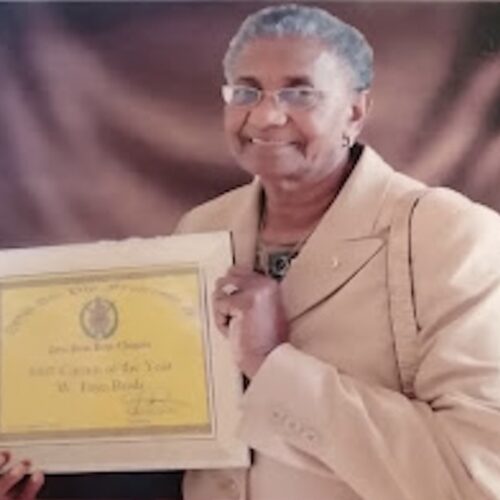
Faye Bush received the Alston/Bannerman Activist Award, given to the ten most influential activists in the United States. The award came with a sabbatical and the chance to travel anywhere in the world. She chose South Africa.