Biography
Early Life
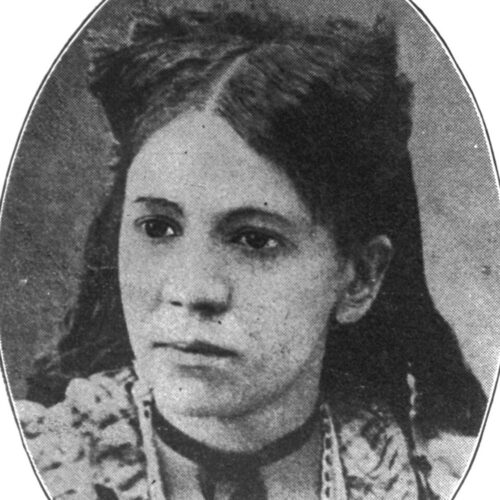
Fanny Jackson Coppin was born into slavery in Washington, D.C., in the year 1837. Her aunt purchased her freedom for $125 in 1849. She was 12 years old. Coppin spent much of her youth in Newport, Rhode Island. She worked as a domestic servant for George Henry Calvert. She sought every opportunity to pursue an education. She hired a tutor with her own earnings. She spent every moment she could educating herself when she was not working or sleeping.
Her thirst for knowledge and a continuing education led her to Oberlin College in Ohio in 1860. This is one of the first institutions in the United States to admit both Black students and women. Initially enrolled in the “ladies’ course,” Coppin soon moved to the more challenging “gentlemen’s course.” She studied subjects such as Latin, Greek, and mathematics. She excelled academically and she taught an evening class for free black persons. Coppin graduated with a Bachelor’s degree in 1865. She was one of only three black women to earn a degree from Oberlin at that time.
Teaching Career
Coppin took a position at the Institute for Colored Youth in Philadelphia (now Cheyney University of Pennsylvania) when she graduated from Oberlin. There she made her mark on African American education. Initially serving as a teacher of Greek, Latin, and mathematics, she quickly rose to Principal in 1869. She was the first black woman to serve the school in that position. Coppin would remain as Principal for 37 years. Under her leadership, the Institute grew into a leading school for Black Americans, especially future teachers.
Coppin’s commitment to educational excellence went beyond traditional academics. She introduced a teacher-training department in 1871. She started a practice-teaching system in 1878. This let students gain hands-on experience along with class lectures. She also created an industrial training department in 1889. This reflected her belief in the importance of vocational training alongside academic education. She believed education — in every form, from trades to teaching to fieldwork — was one of the most powerful tools in the fight against racial discrimination.
Coppin was deeply involved in missionary and social work alongside her work as an educator. She married the Reverend Levi Jenkins Coppin, an African Methodist Episcopal minister in 1881. They embarked on a mission to South Africa in 1902 together. She advocated that women not drink and supported education initiatives for native Black women. She also founded the Bethel Institute in Cape Town. This organization was dedicated to self-help programs and community development and still exists.
Legacy
Coppin had a legacy as an educator and advocate for black women’s education. She retired in 1902. She was recognized as a trailblazer as one of the first Black women to hold a superintendent position in the United States. She was an influential voice in political and educational circles as an advocate for Black persons. Coppin’s work was honored in various ways. This included having the High and Training School of Baltimore renamed the Fanny Jackson Coppin Normal School in 1926.
Fanny Jackson Coppin’s life was one of service, determination, and groundbreaking achievement. She died in Philadelphia in 1913. She left a lasting legacy as a pioneering figure in the education and empowerment of Black persons, especially women.