Biography
Early Life
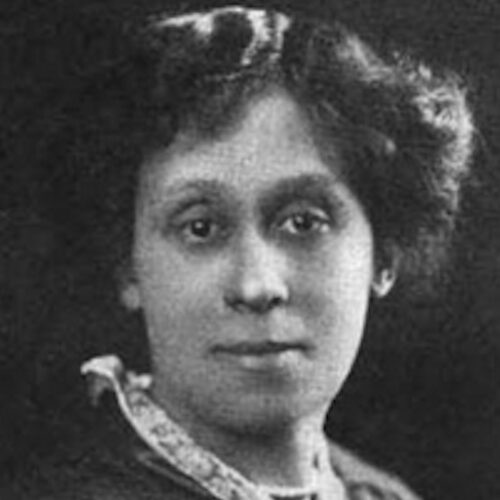
Eva del Vakia Bowles was born on January 24, 1875, in Albany, Ohio. Her parents were Mary Jane and John Hawkes Bowles. Her family had deep roots in education and faith. Her father was the first Black principal of a school in Marietta, Ohio. He also served as one of the first Black railroad postal clerks in the state. Her grandfather, John Randolph Bowles, was a Baptist minister. He served as chaplain of the 55th Massachusetts Infantry Regiment during the Civil War. He also became the first Black teacher hired by the Ohio Public School Fund. Growing up surrounded by people who gave their lives to faith, education and service shaped everything Eva would later become.
She attended public schools in Albany and went on to study at Bliss Business College in Columbus, Ohio. She also took summer courses at Ohio State University. She began teaching after earning her bachelor’s degree. She became the first Black faculty member at Chandler Normal School in Lexington, Kentucky. She also taught at other historically Black colleges, including St. Augustine’s College in Raleigh, North Carolina, and St. Paul’s School in Lawrenceville, Virginia. Her work was driven by a belief that education was one of the most powerful tools in a community.
Faith and Activism Within the YWCA
While teaching in Virginia, Bowles was recruited by Addie Waites Hunton to take on a new role in New York City. She accepted the position of Secretary for the Colored Young Women’s Christian Association in 1905. This organization later became the 137th Street YWCA in Harlem. She was the first Black woman to hold such a position in the entire YWCA organization. This led to nearly two decades of work that would change the shape of the organization for Black women across the country.
Her focus was expanding services for Black women within a YWCA that was still segregated. She pushed for a system where Black branches would operate under the larger YWCA structure rather than exist separate from it. Her plan allowed for cooperation and shared resources. Even though this meant Black branches were not on equal footing with white ones, doors were opened for Black women to take on leadership roles within the organization. The plan was approved and put into place.
Bowles worked to create industrial work centers and recreational spaces for Black women and their families during World War I. Her efforts during the war gained wide recognition. Former President Theodore Roosevelt set aside $4,000 from his Nobel Peace Prize funds to support her programs. She had helped the YWCA reach more than 39,000 Black members in 45 cities across the country by the end of the war.
She kept pushing for greater numbers of Black women within the national organization. Her work led to Black women being included on the national board in 1924 and more Black staff being hired at YWCA headquarters. She also worked to extend the organization’s reach to the majority Black regions of Africa and the Caribbean.
Bowles had grown frustrated with changes happening inside the YWCA by the early 1930s. A restructuring she believed would weaken the influence of Black women led her to resign in 1932. She did not slow down. She joined the National Colored Merchants Association and the National Negro Business League and kept working for her community. In the year she died, she was named executive director of Civilian Defense for the Harlem and Riverside areas of New York City. Her life stood as proof that faith, education, and determined advocacy could open doors that had long been shut.