Biography
Early Life
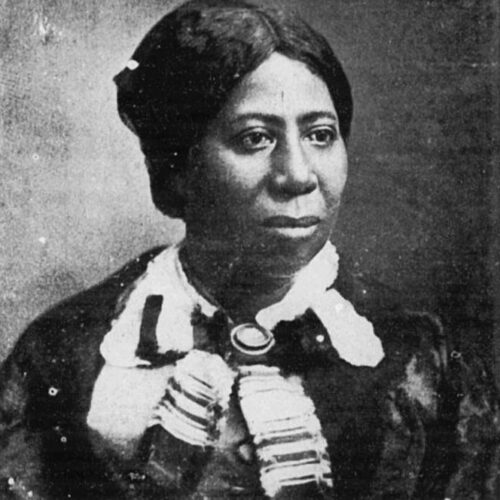
Anna Murray Douglass was born in 1813 in Maryland. Her enslaved parents were Bambarra and Mary. They were freed only one month before Douglass was born. Douglass was the first of their children to be born into freedom. This difference shaped her understanding of liberty and justice from the early beginnings. In her early life she was a member of the Methodist Church.
Anna made a bold decision to leave her parents’ home and move to Baltimore when she was seventeen. She found work as a domestic laborer. She had to apply for a certificate of freedom to legally make this move. The certificate allowed her to travel and work outside her home area. This document was necessary because Maryland remained a slave state until 1864. Free Black people still needed proof of their status to move about safely.
A Partnership That Changed History
Douglass met Frederick Augustus Washington Bailey while working in Baltimore. He was a young, enslaved man who would later become known as the great abolitionist Frederick Douglass. Despite the dangers involved, they fell in love and she became determined to help him gain his freedom. She is credited with inspiring him to escape and played a vital role in making that escape possible.
She carefully planned his journey north. She used her skills as a seamstress to create a sailor’s uniform that would serve as his disguise. She funded the entire dangerous operation using her own hard-earned savings and even sold her feather mattress to raise additional money. Without her courage, planning, and financial support, his escape might never have succeeded.
Years later, the couple’s eldest daughter, Rosetta Douglass, wrote a memoir titled “My Mother as I Recall Her.” In it, Rosetta made a powerful statement: without her mother’s help, her father never would have become the famous abolitionist and speaker the world came to know and respect. In the same story, Rosetta shared that her mother strived to live a Christian life instead of talking about being a Christian.
One week after Douglass reached safety in New York, she bravely joined him there. The two married in the home of David Ruggles, a New York abolitionist who had sheltered him. Together, they chose their new surname—Douglass. This symbolized their fresh start as a free couple. They were devoted members of the Methodist Church. They settled in New Bedford, Massachusetts and raised five children together.
Underground Railroad Work
Douglass remained largely out of the public spotlight throughout her life. She remained deeply passionate about ending slavery. She also believed her primary responsibility was caring for her children and supporting her husband’s public work. She earned money as a skilled seamstress. She also found powerful ways to contribute to the abolitionist cause.
When the family moved to Rochester, New York, Douglass transformed their home into one of the first stops on the Underground Railroad. She created a safe, comfortable place for freedom seekers to rest during their dangerous journeys north. Her home also became an important meeting place where other abolitionists gathered to plan. Historians believe that over 400 enslaved individuals passed through the Douglass home on their way to freedom.
Douglass also became involved with the East Baltimore Improvement Society. This organization was dedicated to creating educational and social opportunities for the city’s free Black population. Black communities throughout the North invested heavily in building their own institutions. They founded churches, established schools, and operated Underground Railroad stations.
Legacy
Douglass was a steadfast pillar of her community. However, she is often overlooked in historical accounts of the abolitionist movement. Much of her work remains undocumented. Like many Black women whose names rarely appear in history books, her contributions were crucial to the movement’s success.
Anna Murray Douglass was a deeply intelligent and capable abolitionist. She supported her husband’s groundbreaking efforts and directly helped hundreds of people escape to freedom. She became ill and eventually passed away in 1882. Her legacy is one of courage, sacrifice, and quiet determination that deserves to be remembered and celebrated.