Biography
Early Life
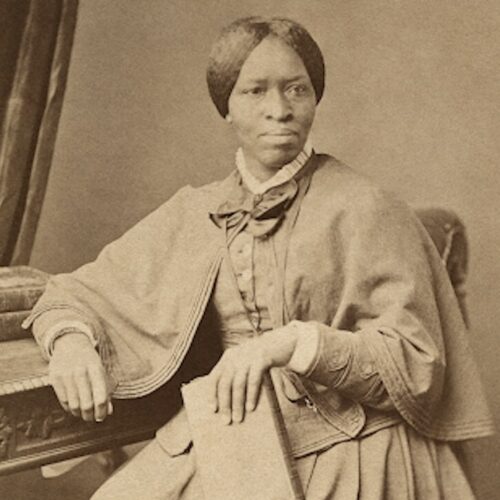
Amanda Berry Smith was born into slavery on January 23, 1837, in Long Green, Maryland. Her parents were Samuel and Mariam Matthews Berry. Her father worked nights to buy freedom for himself and his family. He moved them to Pennsylvania. Their house became a stop on the Underground Railroad. Her parents taught Smith to read and write despite having less than three months of formal education.
Smith married Calvin Devine in 1854. He served in the Union Army during the Civil War but never returned home. This tragedy left her widowed with a young daughter. She married James H. Smith, a deacon in the African Methodist Episcopal (AME) church, in 1865. They faced financial hardship and the deaths of multiple children during the marriage. These tragedies and her faith prepared Smith for her future work as an evangelist and spiritual leader.
Religious Activism and Achievements
An important turning point in Smith’s life was her commitment to Christianity during her first marriage. She adopted the principles of the Holiness Movement. Much emphasis was put on sanctification. This is the idea of leading a life free of choosing sin. She started preaching at Holiness camp meetings in 1869. This was after her second husband died. Her powerful speeches and singing drew crowds from a wide range of racial and religious backgrounds.
Smith became the first African American woman to work as an independent evangelist overseas. She set off on a global missionary tour in 1878. She served as a minister in Africa, India, Scotland, Ireland, and England. Despite difficult circumstances and personal illness, her stay in Liberia was very significant. Smith returned to the United States in 1892. She established the Amanda Smith Orphanage and Industrial Home for Abandoned and Destitute Colored Children in Harvey, Illinois. This was a lifelong desire. This home was one of the first in Illinois to serve African American children.
Social Change
Smith’s dedication to social change was closely linked to her religious activism. Her sermons normally challenged gender and racial stereotypes. She focused on justice, equality, and the power of Christianity to change lives.
Smith’s work served as an example of women’s power and courage. She inspired many African American women to take up activism. She served as an example of leadership that included racial and denominational differences. Her autobiography was released in 1893. It documented her journey and motivated women who wanted to find a balance between action and faith.
Smith was a leader who did more than just preach. She could relate to a variety of cultures. Her industrial home and orphanage gave Black children education and life skills. This gave disadvantaged people real help.
Diversity
Smith’s accomplishments have often been disregarded in historical accounts that center on male leaders. She lived a range of experiences among African American faith traditions. Her groundbreaking work as a Black female evangelist and missionary expanded views on America’s religious landscape.
Smith’s efforts improved the standard of living in Black communities. She supported women’s freedom, education, and self-control. This increased African Americans’ ideals of fairness and equality.
Legacy
Amanda Berry Smith made a lasting impact on American religious and social history with her life of faith, faithfulness, and service. She died in Sebring, Florida, on February 24, 1915. Her memory lives on as an inspiration to people who are dedicated to spiritual development and social justice.