Biography
Early Life
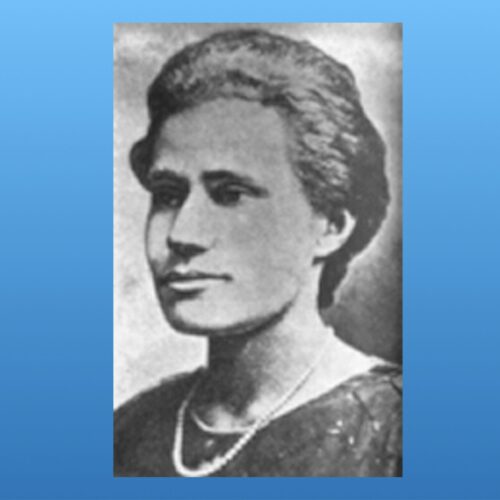
Elizabeth Ross Haynes was born on July 31, 1883, in Mount Willing, Alabama. Her parents were formerly enslaved. Her early life was shaped by the determination and strength of her parents. They worked tirelessly to improve their circumstances. Haynes grew up in Lowndes County. This was known to be one of the poorest regions in Alabama. Her parents purchased land and established a plantation. They saved enough money to send Elizabeth to State Normal School in Montgomery.
She benefited from her parents’ support for her education. She graduated as valedictorian. This early educational success set the stage for her later achievements. Ross earned a scholarship to attend Fisk University in 1901. She graduated with an A.B. degree in 1903. This education provided her with a broad academic foundation. She was equipped with the tools she would later use to advocate for social and economic improvements for African American women.
Ross moved north to New York City when she graduated from college. She began working with the Young Women’s Christian Association (YWCA). She served as the YWCA’s student secretary for work among Black women from 1908 to 1910. During this time, she met and married George E. Haynes. He was a prominent sociologist who co-founded the National Urban League. This marriage marked a new chapter in her life. It allowed her to further her social activism and expand her reach within the reform movement.
Her formal education and the support of her family paved the way for her to become a change-maker. Haynes became a leading voice for African American women during a time when their voices were often under-valued. Her academic background and early involvement with the YWCA laid the foundation for her lifelong commitment to social reform. She specialized in the areas of women’s education, employment, and labor rights.
Religious Faith & Activism
Haynes was very active in her faith. This is made evident through her work with the YWCA. She was also an active member of the Alpha Kappa Alpha Sorority, Incorporated. This organization was founded on principles of service and religious faith. She first joined as a paid employee. However, she left after two and a half years to focus on marriage and family. She remained a committed volunteer for over 20 years.
She gave birth to her son, George Jr., in 1912. Haynes continued her reform efforts even as a young mother. She helped establish YWCA branches to support female migrants in finding jobs and job training. She earned an M.A. in Sociology from Columbia University in 1913. Haynes became the first Black woman on the YWCA’s national board in 1922.
Haynes conducted studies on Black women’s employment for the U.S. Department of Labor during the 1930s. She was a strong supporter of President Franklin D. Roosevelt’s New Deal. She used her education and skills to advocate for Black women workers. Some Black leaders criticized her for supporting separate programs within the segregated YWCA. However, she believed that addressing Black women’s immediate needs was more important than the fight for integration. Still, her work played a key role in the YWCA’s decision to integrate in 1946.
Haynes was also an author. She published Unsung Heroes, a book that highlighted the achievements of Black leaders in 1921. Her master’s thesis, Two Million Negro Women at Work, became one of the most comprehensive studies on Black women’s employment and was praised for decades. She published The Black Boy of Atlanta in 1952. This is a biography of Richard Robert Wright, Sr. He was a former slave who became a college and bank president.
Haynes’ contributions to social reform, racial uplift, and gender equality left a lasting impact. Through research, advocacy, and writing, she challenged systemic barriers. She created greater opportunities for Black women. Her efforts influenced the integration of the YWCA. This expanded job training programs. Haynes also provided historical models of Black figures to children through literature. Her legacy endures in the institutions she strengthened and the lives she touched.