Biography
Early Life
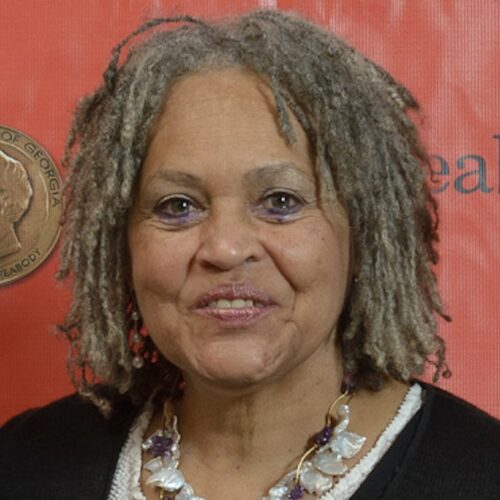
Charlayne Hunter-Gault was born on February 27, 1942, in Due West, South Carolina. She was raised in the African Methodist Episcopal Church and converted to Catholicism in high school. Her father, Charles S. H. Hunter Jr., was an army chaplain. His job required the family to move often. They lived together in California, Ohio, and Indiana. Hunter-Gault also spent much of her early life in Covington and Atlanta, Georgia, with her mother, Althea Ruth Brown, and her maternal grandmother. Her grandmother encouraged Hunter-Gault’s love for reading and newspapers. This sparked a lifelong interest in storytelling and journalism.
Hunter-Gault was in eighth grade in 1954 when her family moved to Alaska. She was the only Black student at the army school. This was just a year after the historic Brown v. Board of Education case. This case ordered schools to desegregate across the United States. Hunter-Gault parents separated in 1955. She returned to Atlanta with her mother and two younger brothers. She enrolled at Henry McNeal Turner High School. This was a respected Black school where she was a top student and became active in several school clubs. Hunter-Gault’s interest in journalism continued to grow. She became the editor-in-chief of the school newspaper, The Green Light, assistant editor of the yearbook, a member of the student council, and the honor society. She also became homecoming queen and graduated third in her class in 1959.
Journalism & Activism
In her senior year at Turner, Hunter-Gault and her classmate, Hamilton Holmes, were approached by Atlanta’s Black civic leaders to challenge segregation in Georgia’s public universities. They applied to the University of Georgia (UGA) after visiting Georgia State College of Business Administration (later Georgia State University). They were denied admission due to racial discrimination. Hunter-Gault then began her college studies at Wayne State University in Detroit, Michigan. She and Holmes kept applying to UGA each term. Their attorneys, Constance Baker Motley from the NAACP Legal Defense Fund and Atlanta lawyers Donald Hollowell, Vernon Jordan, and Horace Ward, fought their case in court.
After two years, a U.S. judge ruled that they were qualified for UGA and had the right to enroll immediately. Hunter-Gault and Holmes became the first Black students at UGA in January 1961. Hunter-Gault faced many challenges at UGA. These included hostile classmates, racial slurs, and even violent mobs trying to force her to leave. But she stayed focused on her goals and earned a journalism degree in 1963. Her graduation was a personal victory and a major step forward in the fight for equal education in the South.
Hunter-Gault began her journalism career after college at The New Yorker as an editorial assistant. She soon became a writer for the “Talk of the Town” section. She covered news and events around New York City. Her next job took her to WRC-TV in Washington, D.C., as a reporter and evening anchor. She moved to The New York Times in 1968. She became the Harlem bureau chief and wrote about issues in the Black community. Hunter-Gault pushed the Times to replace the term ‘Negroes’ with ‘Black’ to better reflect how African Americans identified themselves.
Hunter-Gault joined The MacNeil/Lehrer Report on PBS in 1978. She covered national stories that often focused on racism and human rights. She reported on important topics like apartheid in South Africa. This helped Americans understand global issues. She moved to Africa as National Public Radio’s (NPR) Africa bureau chief in 1997. She later held the same role at CNN in Johannesburg. Living in South Africa, Hunter-Gault documented the country’s shift from apartheid to democracy while living in South Africa. This gave audiences around the world insight into the oppression and historic changes happening there.
Hunter-Gault’s achievements earned her many honors. These include two Emmy Awards, two Peabody Awards, and a place in the National Association of Black Journalists Hall of Fame. She remained dedicated to sharing the stories and experiences of Black people. In her memoir, In My Place (1992) and her book My People: Five Decades of Writing About Black Lives (2022), she reflected on her journey and commitment to journalism and civil rights.
Charlayne Hunter-Gault’s life is a testament to courage and determination. From challenging segregation at UGA to becoming a respected journalist, her story inspires people to fight for fairness and truth. Her work continues to pave the way for more diverse voices in media and serves as a lasting example of integrity and strength.