Biography
Early Life
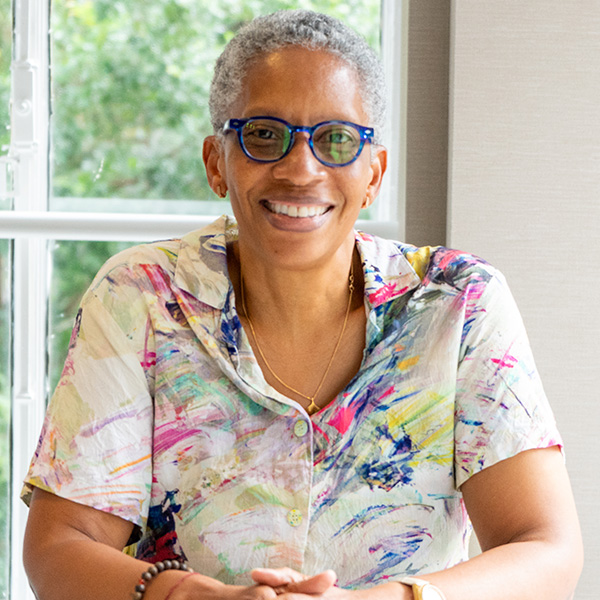
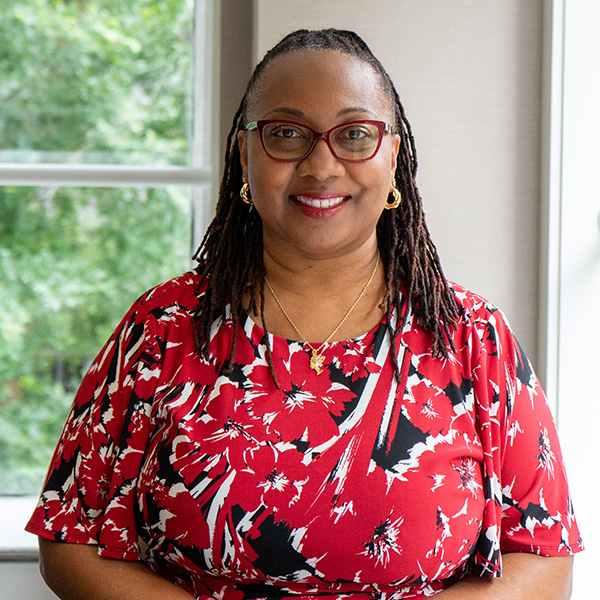
Catherine Coleman Flowers was born in Birmingham, Alabama in 1958. Her parents were J.C. and Mattie Coleman. Her mother was a teacher’s aide. Her father was a military veteran and a salesman. Both parents were civil rights activists and members of the Student Nonviolent Coordinating Committee (SNCC). Flowers was raised to follow the Missionary Baptist faith. She said, “My father has read the Bible from cover to cover numerous times. Part of our routine in the evening was watching him read the Bible.”
The family moved to Lowndes County, Alabama in 1968. It is a rural community located along the Selma to Montgomery National Historic Trail. In an interview with The Guardian Flowers said, “Violence was always in the air in Lowndes County” referring to the daily traumas felt by people. Lowndes County has failing or inadequate human waste disposal systems. Most of its residents cannot afford functioning septic systems. This causes wastewater pools to form behind their houses. Flowers used slop jars (aka waste bucket) and an outhouse as a child. She also walked long distances to pump water from a well. Her family eventually dug out a cesspool (aka waste pit). This made it possible for them to have indoor plumbing.
Flowers’ mother was sterilized without her consent after giving birth to her younger sibling. The British Broadcasting Company (BBC) interviewed Flowers’ mother about her experience. During the interview, she learned that her own high school principal may have been involved in the killing of a nine-year-old Black girl. When Catherine was sixteen years old, she joined the Robert F. Kennedy Fellows Program. As a Fellow, she learned how to combat poverty and injustice. She used this knowledge to organize a protest at her high school Lowndes County Training School. Flowers also wrote an official complaint against the school for its poor learning conditions. Her complaint led to the resignation of the principal and school board superintendent.
Flowers briefly attended Alabama State University. She joined the Air National Guard in 1978 and then the Air Force. She left military service after two years and moved to Oklahoma. Flowers enrolled at Cameron University in Lawton. She earned her Bachelor of Arts degree in History and Political Science in 1986. She obtained her Master of Arts degree in History from the University of Nebraska in 2015. Flowers became a Geography Teacher after graduating.
Religious Faith & Activism
In the Faith and Leadership magazine Flowers said, “My spirituality allows me to do what I do in terms of the work, because sometimes it’s hard, and sometimes you can’t see the end. You just have to visualize it and try to work toward that. And sometimes I haven’t had any resources. But I’ve had faith.”
Flowers returned to Lowndes County in 2000. She saw that the lives of people, poor people, had not changed. Residents had indoor plumbing, but raw sewage was still being piped out onto the ground. People were also being fined or arrested for not having on-site septic systems. Flowers began working as an Economic Development Consultant for the National Center for Neighborhood Enterprise. Catherine began working as the Rural Development Manager at the Equal Justice Initiative in Montgomery in 2008. Both of these positions equipped Flowers to address poverty and environmental injustices.
Flowers joined Union Theological Seminary in 2015 as a Senior Fellow for Environmental Justice and Civic Engagement at the Center for Earth Ethics. In 2017, Flowers invited the United Nations Special Rapporteur on Extreme Poverty and Human Rights to visit Lowndes County.
Flowers founded The Center for Rural Enterprise and Environmental Justice in 2019. She testified before Congress that same year. She urged action on sanitation problems. She told Congress about how she contracted parasites in Lowndes County during her testimony.
In 2020, Catherine was awarded a MacArthur Fellowship. She wrote Waste: One Woman’s Fight Against America’s Dirty Secret. The next year, she was named Vice Chair of the White House Environmental Justice Advisory Council. Catherine has published articles in Anglican Theological Review, Columbia Human Rights Law Review, and the American Society of Tropical Medicine and Hygiene. She often gives speeches on environmental justice at colleges.
Flowers wrote Holy Ground: On Activism, Environmental Justice, and Finding Hope in 2025. She used biblical stories to describe present-day struggles at her book launch. She compared Judas betraying Jesus to political corruption, warning about leaders who value profit over community.