Biography
Early Life
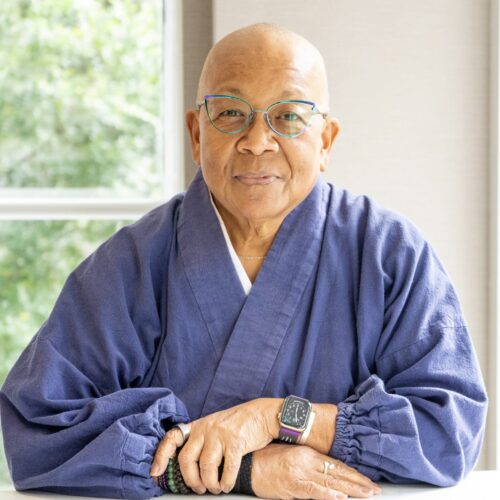
Myokei Caine-Barrett moved often as a child because of her family’s military life. She lived in places like Japan, Germany, and El Paso, Texas. Barrett grew up Methodist and attended church every Sunday. She became the first American woman of African Japanese descent to be ordained as a Buddhist priest.
Caine-Barrett learned about Buddhism in 1963. A friend’s mother invited her to Soka Gakkai meetings. Though her parents didn’t approve, she chose Buddhism as her path. In Buddhism, she found her true spiritual home. She learned she was in charge of her own life and had the power to direct it. Buddhism teaches that everything you need is already inside you—you just need to bring it out.
Notable Achievements
In 2002, Myokei Caine-Barrett began training to become a Buddhist priest in Portland, Oregon, and Japan. She was ordained in 2007. Her priestly name became Myokei Shonin. She was Head Priest and teacher of the Nichiren Buddhist Sangha of Texas, also called Myoken-Ji Temple. After practicing for 36 years, Caine-Barrett left Soka Gakkai International and joined Nichiren Shu.
Today, Myokei Shonin works in prison ministry. She supports two sanghas and people throughout Texas prisons. She also works with hospice care and the veterans’ program Healing Warrior Hearts. This is part of her role as Bishop of the Nichiren Shu Order of North America. Barrett says her prison work has taught her much. She has seen people in prison learn to value themselves and realize they aren’t throwaway people. She believes people always have the chance to change.
Moral Life & Social Change
Myokei Shonin had her first rebellion in Japan. When all women were serving tea, she refused unless men of the same rank also had to serve. She believes in modeling that women are capable. She teaches that men don’t own status or authority alone. She believes men aren’t the only ones who can teach and lead.
Myokei Shonin uses her position to encourage others toward compassion. She shared this message at the National Buddhist Memorial Ceremony for Asian American Ancestors. This service honored the six victims of the Atlanta massacre and all Asian Americans who have faced racism and violence.
Leadership
Caine-Barrett learned from her father never to ask someone to do something you won’t do yourself. The greatest lesson she’s learned about leadership is to lift others up and share leadership.
Also, Myokei Shonin believes leaders shouldn’t get caught up in being the authority. In Buddhist practice, everyone connects. She believes that when working with others, she doesn’t need to be perfect or wiser. She can be a good friend or try to meet their needs. She believes Buddha’s teachings can flow through her life and connect with others.
Religious Advocacy
Myokei Caine-Barrett works to unite Asians and Blacks. She knows there shouldn’t be division between different groups. She finds inspiration in Buddhist teachings about our connections and how what affects one person affects us all.
Myokei Shonin embracing these ideas can improve the world. She also believes anyone can benefit from Buddhist teachings no matter their background. She has worked with people facing many challenges, including schizophrenia, autism, gender identity issues, and incarceration.