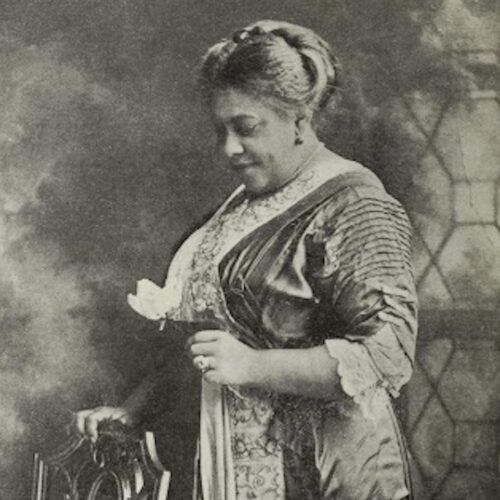
Biography
Early Life
Mary Talbert was born on September 17, 1866, in Oberlin, Ohio. She was the youngest of five children. Her parents were Cornelius and Caroline Burnett. They taught her the importance of standing up for what is right. They also believed deeply in the power of education. These values would shape Talbert’s future path as a leader in the fight for justice.
Talbert’s family history was rooted in freedom and courage. Her parents came from families that had escaped slavery through the Underground Railroad. This legacy gave Mary a strong sense of responsibility to continue the struggle for civil rights.
The African Methodist Episcopal Church played a key role in her childhood. She learned about service, faith, and the importance of helping others through the church. These lessons became the foundation of her lifelong commitment to justice.
Talbert completed her early schooling in Oberlin. She graduated from Oberlin College in 1886 with a Bachelor of Arts degree. She was the only Black woman in her graduating class. During college, she joined organizations that worked for change and built leadership skills. Her involvement prepared her to become a civil rights leader.
Education and Organizing
Talbert taught at Bethel University in Little Rock, Arkansas, after college. She later became Assistant Principal of Union High School. This was the highest-ranking position held by a Black woman in the city at that time.
She married William H. Talbert in 1891. He was a lawyer and fellow civil rights advocate. They moved to Buffalo, New York. She became deeply involved in civic work.
Talbert helped establish the National Association of Colored Women (NACW) in 1899. She gave a key speech at their 1901 meeting in Buffalo. She helped start the Empire State Federation of Colored Women in 1908. She also served as both President and Parliamentarian for this organization.
Talbert served as President of the NACW from 1916 to 1921. She became the first Black woman to represent the group at an international conference in Norway in 1920. She gave speeches on women’s rights and racial equality across Europe.
Talbert also fought for representation in her own country. She protested the exclusion of African Americans from the 1901 Pan-American Exposition. She pushed for diverse voices to be included in decision-making roles.
She helped found the Niagara Movement with W.E.B. Du Bois in 1905. This movement later led to the creation of the NAACP. She helped start Buffalo’s first NAACP chapter in 1910. She served on the national board and as Vice President from 1919 until she died in 1923.
Advocacy and Legacy
Talbert became the National Director of the NAACP’s Anti-Lynching Campaign in 1921. She was the first woman to receive the Spingarn Medal, the NAACP’s highest honor.
Talbert also fought for women’s right to vote. She worked with well-known suffragists like Susan B. Anthony and Elizabeth Cady Stanton. She believed that change came when everyday people stood together and took action.
Mary Talbert passed away on October 15, 1923, but her legacy lives on. Her life continues to inspire those working for justice and equality today.