Biography
Early Life
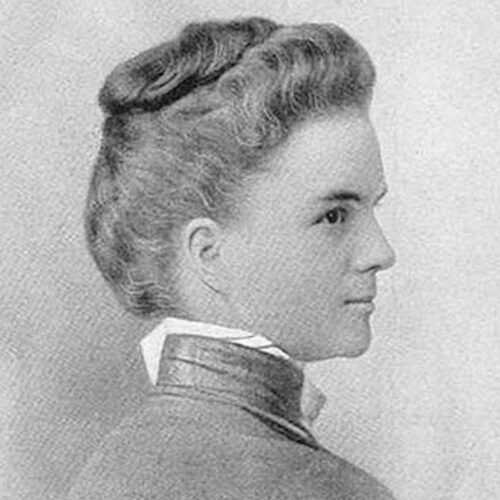
Adella Hunt was born in 1863 in Sparta, Georgia. Her mother was a Black and free Cherokee woman named Mariah Hunt. Her father was a white plantation owner named Henry Hunt. She was the fourth-born child of eight children. Hunt was raised only by her mother. She was influenced by her mother’s Cherokee culture and spirituality.
Her father was not in the home. However, he made sure Hunt got an education at Bass Academy. She became a certified teacher at 16 years old. Hunt earned a scholarship to Atlanta University. Today this school is called Clark Atlanta University. She taught for two years in Albany at an AMA primary school after she graduated. This began her teaching journey and career in education.
Education Activism
Hunt was offered teaching positions at two schools in 1883. One was at Atlanta University. The other was at Booker T. Washington’s Tuskegee Institute. She chose to teach at Tuskegee. She formed close bonds with important people while teaching there. These people included Booker T. Washington, W.E.B DuBois, and George Washington Carver. DuBois was a co-founder of the NAACP. She became the second woman to be a part of the faculty of the Tuskegee Institute in Alabama.
Hunt did further studies at the Chautauqua Literary and Scientific Institute in New York. She worked on a master’s thesis under the guidance of DuBois at Atlanta University. Her degree was honorary. This was because the university was not yet approved to issue graduate degrees. She taught English at Tuskegee. She also taught various humanities and social science subjects.
Hunt became Tuskegee’s first librarian. She added resources about women’s suffrage to the library. She also temporarily served as co-principal. She added mathematics and literature to the curriculum.
Hunt married Warren Logan in 1888. He was a coworker at Tuskegee University. Logan had mixed-race parents. He was born a slave in Virginia. He pursued education after being freed. He began teaching a few years before Hunt. Logan also developed a friendship with Booker T. Washington while at Tuskegee. He served as Tuskegee’s treasurer.
Hunt and Logan welcomed nine children between 1890 and 1909. Six survived into adulthood. Getting an education was very important for their children. They developed a family of academic honors and important professions.
Activism for Women
Hunt Logan’s activism focused mostly on education and women’s rights. She became an active member of the Tuskegee Women’s Club in 1895. There she led discussions and engaged in debates. Common topics were racial progress, education, reform within the prison system, and women’s rights. The club joined the National Association of Colored Women (NACW) a year later. The Tuskegee chapter focused on improving the well-being of African Americans within their communities. She played a big role in programs and events dedicated to improving healthcare. She also supported prison reform and managed a lending library.
Women organized movements to make social and political changes, but Black women were often excluded from mainstream women’s suffrage groups. One of these groups was the National American Woman Suffrage Association (NAWSA). The NAWSA was led by famous white suffragists Susan B. Anthony and Carrie Chapman Catt. The group did not welcome Black women. However, Hunt Logan was able to pass as a white woman. She participated in meetings organized by white suffragists.
The meeting that changed her life was the 1895 NAWSA convention in Atlanta. She heard Susan B. Anthony give a speech. She was inspired to join NAWSA. Hunt Logan and other African American suffragists organized within the Black women’s club movement. This work happened both locally and nationally. These clubwomen founded the National Association of Colored Women (NACW) in 1896. Hunt Logan led their suffrage department for a long time.
She also wrote poems and articles advocating for Black women’s suffrage throughout the early 1900s. They were published in important African American publications. These included Colored American Magazine and the NAACP’s magazine called The Crisis. She also played a key role in arranging a march on Tuskegee’s campus that same year. Several hundred supporters participated in the march.
The United States ratified the Nineteenth Amendment in 1920. It granted women the right to vote. This happened five years after her death. Hunt Logan had tirelessly fought for this right throughout her life.